News

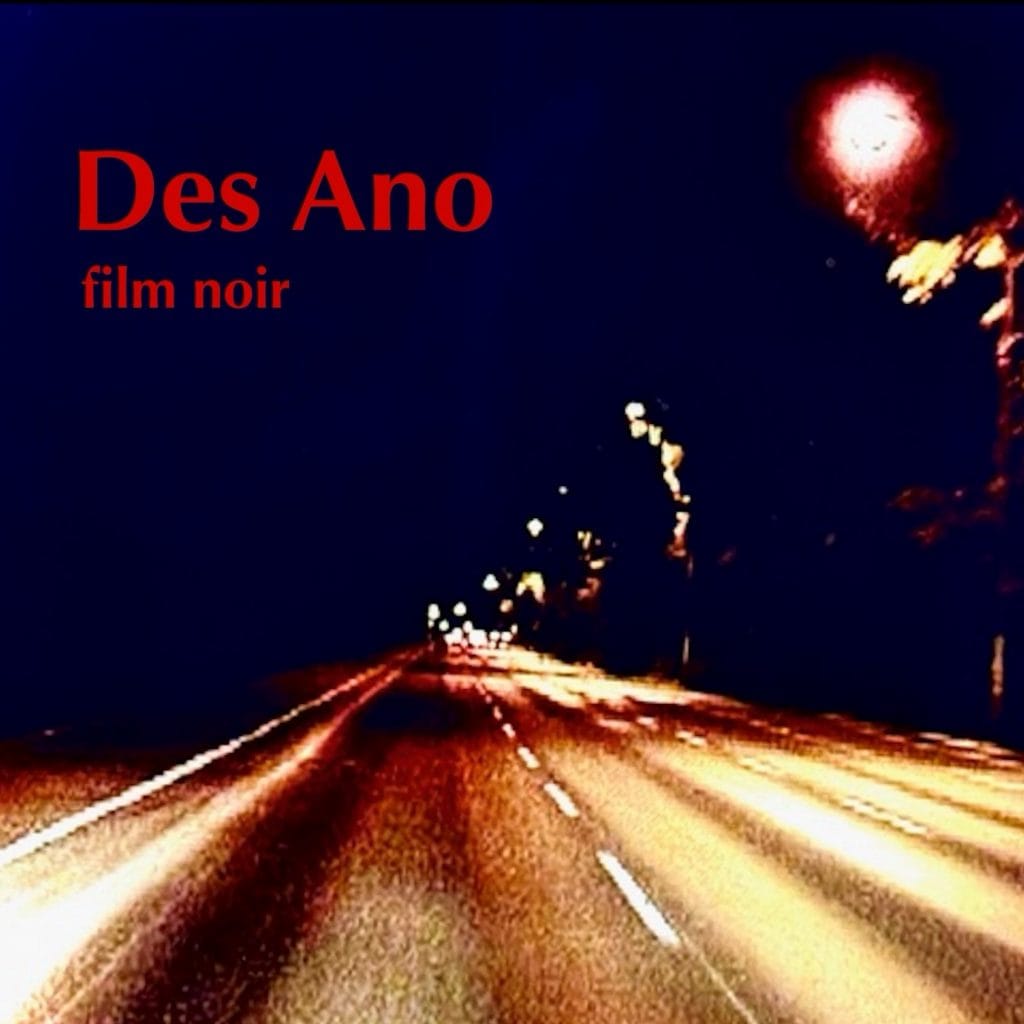
Des Ano Releases “Film Noir (Live)” on Spotify

Austrian musician Des Ano has officially released his song “Film Noir (Live)” on Spotify. With his distinctive fusion of traditional Viennese folk music, electronic sounds, and rap, the artist once again demonstrates his creative approach to contemporary music.

A Unique Blend of Viennese Folk Music, Electronic Sounds, and Rap

Over the years, Des Ano has built a reputation for his extraordinary musical style. His work combines the rich tradition of Viennese folk songs with modern electronic elements and urban rap influences. This rare combination creates a unique sound that continues to attract attention both in Austria and internationally.

“Film Noir (Live)” Available Now

With the live version of “Film Noir,” Des Ano brings the special atmosphere of his performances directly to streaming audiences. The track is now available on Spotify and highlights the artist’s remarkable versatility and creativity.

International Recognition for Des Ano

Thanks to his innovative musical approach, Des Ano has earned a strong reputation beyond Austria’s borders. His ability to blend tradition and modernity makes his music a compelling experience for fans of sophisticated German-language music.

Für K.: Neue Geschichten und Bilder für Franz Kafka

Herausgegeben von Otto Brusatti, echo medienhaus. Buch ISBN: 9783903989573

Wie erweist man einem Franz Kafka, und noch dazu zu dessen 100. Todestag, die Reverenz? Er hat die Literatur geprägt wie wenige. Kaum eine Schriftstellerin/Poetin, kaum ein Schriftsteller/Poet, ja kaum Künstlerinnen oder Künstler sonst können sich seinem Geschriebenen entziehen. Herausgeber Otto Brusatti hat es gewagt und bat 17 Künstlerinnen und Künstler um ihren persönlichen Beitrag zu Franz Kafka. Die Form sollte keine entscheidende Rolle spielen. Es konnte sich um eine Erzählung, eine Novelle, eine Parabel handeln, aber um kein dramatisches Stück und auch keine etwa Weiterformulierung oder gar Fortschreibung eines Kafka-Torsos (so es den dichterisch bei ihm überhaupt gibt); aber Kafka sollte Anstoß, geheime Idee, gar Vorbild dafür sein. Theodora Bauer, Arno Geiger, Max Gruber, Monika Helfer, Bodo Hell, Paulus Hochgatterer, Franz Hohler, Radek Knapp, Natasha Korsakova, Thomas Macho, Kurt Palm, Rafik Schami, Stefan Slupetzky, Edgar Tezak, Renate Welsh und Anton Zeilinger erklärten sich zu einen Beitrag bereit. Das Ergebnis kann in diesem Band nachgelesen werden: Die Beiträge sind höchst unterschiedlich. Fast niemand aber konnte oder wollte sich Kafka-Vorbildern (vor allem aus manchen Erzählungen oder aus dem Roman „Der Prozeß“) entziehen.

Live & Stream

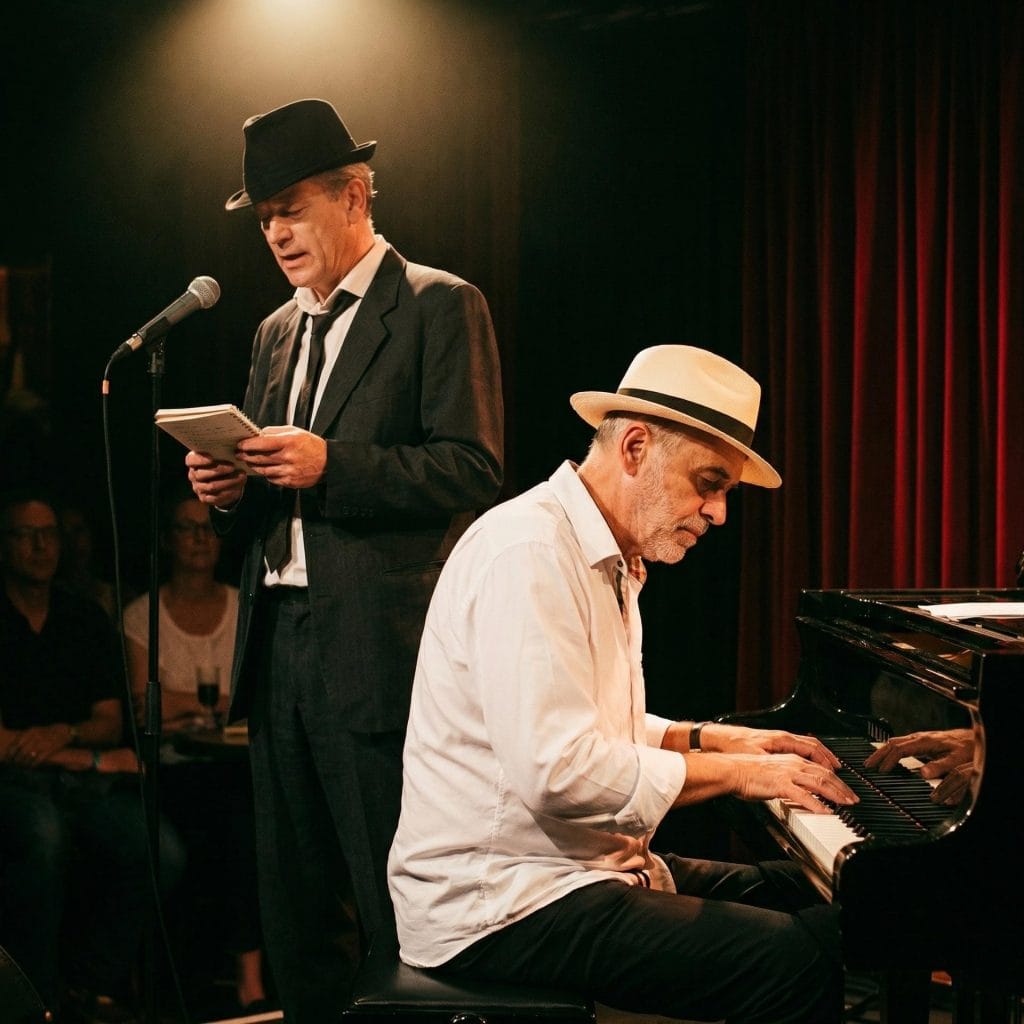
Max Gruber & Heinz Ditsch

Max Gruber & Heinz Ditsch ‘Song to Myself’ (A)

Porgy & Bess, May 26, 2026 – 8:30 PM

We will start the live stream approximately 30 minutes before the concert begins (real-time only; it will no longer be available after the concert ends). By clicking on “Go to Livestream,” a window will open where you can watch the concert free of charge and without any registration. However, we kindly ask you to support this project through “Pay as you wish.” Thank you, and welcome to the real and virtual club!

Heinz Ditsch and Max Gruber have come together to reconnect with an ancient artistic tradition of this city — the fusion of poetry, music, performance, and modernity inseparably associated with names such as Abraham a Sancta Clara, Johann Nestroy, Konrad Bayer, H. C. Artmann, and Ernst Jandl.

This tradition was embodied by the legendary ensemble “Des Ano,” with which Gruber achieved the remarkable feat of defining an entirely new genre: RAP as “Rhythmically Performed Poetry.” The German newspaper DIE ZEIT wrote that Gruber was the “new house poet of the dark Viennese school of mourning, melancholy, musicality, and lurking, sometimes ranting malice.” Elke Heidenreich named the wicked “Little Man” her favorite piece. With the new program “Song to Myself,” this tradition continues.

Heinz Ditsch, accordionist with Kollegium Kalksburg, returns to his old love, jazz, and leads a classical piano trio. Drummer Georg Edlinger and double bassist Sascha Lackner demonstrate their stylistic versatility.
With Max Gruber as narrator and reciter, every form of encounter, fusion, and confrontation between music and language is explored.

A music as eloquent as language is musical. “Song to Myself” tells of the difficulties of achieving greatness in life and investigating the causes of one’s own hard-earned insignificance. A musical-literary tour de force oscillating between concert, literary performance, spoken opera, theatre evening, elevated liver values, and deep melancholy — while not shying away from moments of “irresponsible cheerfulness” (© Karl Kraus).
(Press text)

For K.: New Stories and Images for Franz Kafka

Edited by Otto Brusatti, echo medienhaus. Book ISBN: 9783903989573

How does one pay homage to Franz Kafka—especially on the centenary of his death? He shaped literature like few others. Hardly any writer or poet, scarcely any other artist, can escape his influence. Editor Otto Brusatti rose to the challenge by inviting seventeen creators to offer their personal responses to Kafka. The form was left open: it might be a short story, a novella, a parable—but not a dramatic piece, nor any kind of continuation or elaboration of a Kafka fragment (if such a poetic “tors o” exists at all). Instead, Kafka was to serve as stimulus, secret inspiration, even model.

Theodora Bauer, Arno Geiger, Max Gruber, Monika Helfer, Bodo Hell, Paulus Hochgatterer, Franz Hohler, Radek Knapp, Natasha Korsakova, Thomas Macho, Kurt Palm, Rafik Schami, Stefan Slupetzky, Edgar Tezak, Renate Welsh, and Anton Zeilinger all agreed to contribute. The result can be found in this volume: the pieces are strikingly diverse—yet almost no one could or would entirely avoid Kafka’s models (above all from certain stories or from the novel „Der Prozeß“).

New Stories and Images for Franz Kafka

For K.: New Stories and Images for Franz Kafka

Edited by Otto Brusatti, echo medienhaus. Book ISBN: 9783903989573

How does one pay homage to Franz Kafka—especially on the centenary of his death? He shaped literature like few others. Hardly any writer or poet, scarcely any other artist, can escape his influence. Editor Otto Brusatti rose to the challenge by inviting seventeen creators to offer their personal responses to Kafka. The form was left open: it might be a short story, a novella, a parable—but not a dramatic piece, nor any kind of continuation or elaboration of a Kafka fragment (if such a poetic “tors o” exists at all). Instead, Kafka was to serve as stimulus, secret inspiration, even model.

Theodora Bauer, Arno Geiger, Max Gruber, Monika Helfer, Bodo Hell, Paulus Hochgatterer, Franz Hohler, Radek Knapp, Natasha Korsakova, Thomas Macho, Kurt Palm, Rafik Schami, Stefan Slupetzky, Edgar Tezak, Renate Welsh, and Anton Zeilinger all agreed to contribute. The result can be found in this volume: the pieces are strikingly diverse—yet almost no one could or would entirely avoid Kafka’s models (above all from certain stories or from the novel „Der Prozeß“).

For K.: New Stories and Images for Franz Kafka

Edited by Otto Brusatti, echo medienhaus. Book ISBN: 9783903989573

How does one pay homage to Franz Kafka—especially on the centenary of his death? He shaped literature like few others. Hardly any writer or poet, scarcely any other artist, can escape his influence. Editor Otto Brusatti rose to the challenge by inviting seventeen creators to offer their personal responses to Kafka. The form was left open: it might be a short story, a novella, a parable—but not a dramatic piece, nor any kind of continuation or elaboration of a Kafka fragment (if such a poetic “tors o” exists at all). Instead, Kafka was to serve as stimulus, secret inspiration, even model.

Theodora Bauer, Arno Geiger, Max Gruber, Monika Helfer, Bodo Hell, Paulus Hochgatterer, Franz Hohler, Radek Knapp, Natasha Korsakova, Thomas Macho, Kurt Palm, Rafik Schami, Stefan Slupetzky, Edgar Tezak, Renate Welsh, and Anton Zeilinger all agreed to contribute. The result can be found in this volume: the pieces are strikingly diverse—yet almost no one could or would entirely avoid Kafka’s models (above all from certain stories or from the novel „Der Prozeß“).

2026 © Max Gruber